Signs You Need Diesel Engine Repair and When to Call a Pro in Commerce
Hard starts, visible smoke, power loss, or a new rough idle usually trace back to fuel delivery, injectors, or worn engine parts, and each one is worth checking before the damage spreads.
Published
Part of our Diesel Engine Repair service.
What Diesel Engine Trouble Looks Like and Why It Starts
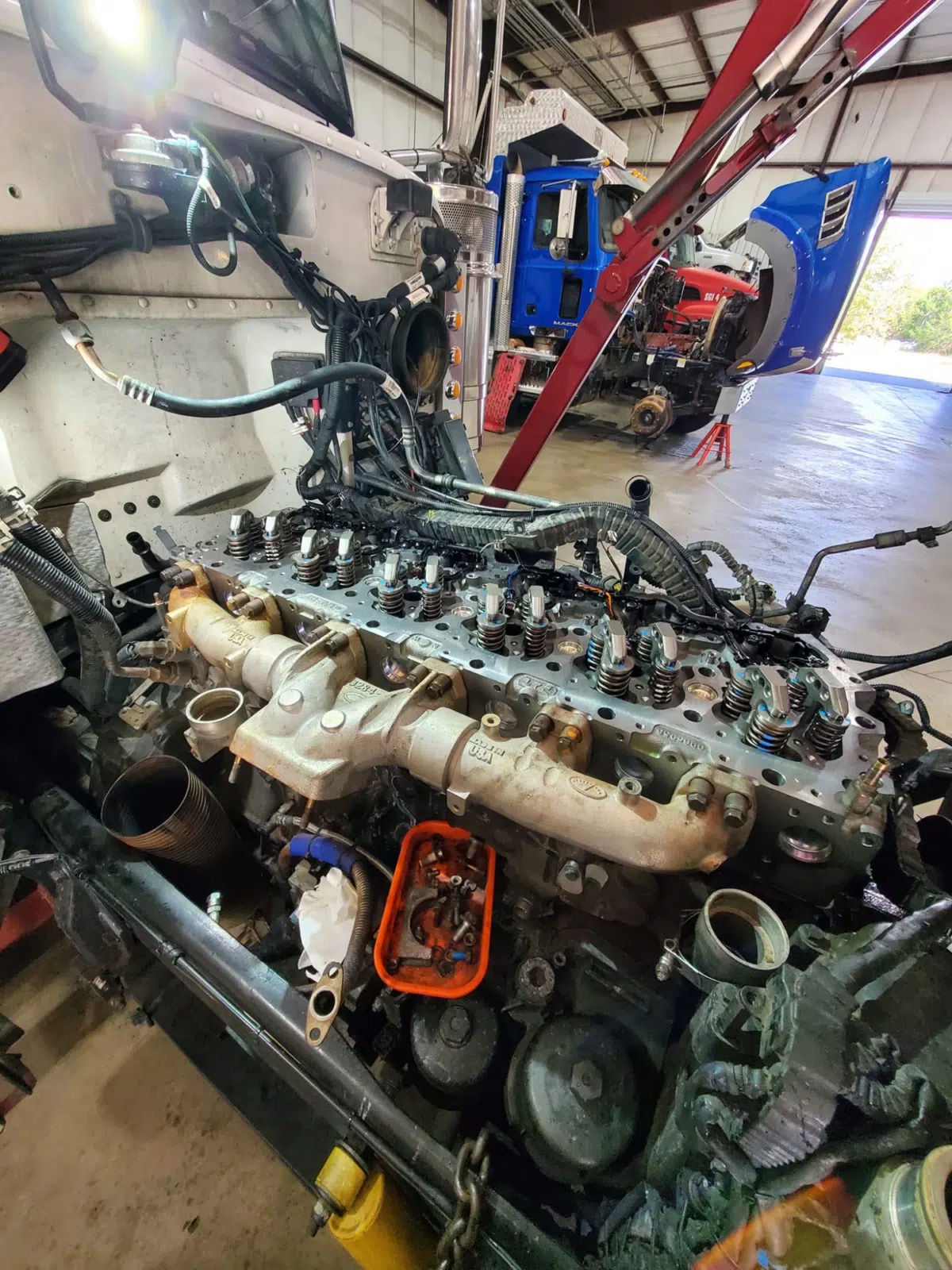
A diesel that needs engine repair rarely fails all at once. It announces itself in small changes: a longer crank in the morning, a haze of smoke at startup that lingers, a shake at idle that was not there last month, or a truck that feels flat pulling a load up 441. North Georgia Truck and Diesel Service in Commerce wrote this guide on signs you need diesel engine repair and when to call a pro.
These changes usually trace back to a short list of causes. Fuel delivery is the most common, because a diesel lives on precise injection pressure and timing. Injectors that dribble instead of atomizing, a lift pump getting weak, or air leaking into the fuel lines all show up as hard starts and rough running.
Wear is the second cause. Rings, valves, and cylinder walls lose their seal over years of work, and compression drops with them.
Heat and load speed both problems up. Towing, long idles, and summer traffic around Commerce and Jefferson work a diesel harder than a short commute does. Catching the early signs leaves you more repair options than waiting until the engine will not start at all, which is the whole point of the checks below.
Hard Starts That Keep Getting Longer to Crank
A healthy diesel fires within a second or two of the key turning. When cranking stretches to three, four, or five seconds, and gets worse over weeks, fuel or compression is not where it should be.
The usual suspects, roughly in order of how often they turn out to be the problem: air in the fuel lines, usually from a filter seal or a fitting that lets fuel drain back overnight. Injectors that leak down or no longer hold rail pressure between runs. Glow plugs or the glow control circuit, which matter most on cold mornings.
Low compression from worn rings or tight valves is further down the list but more serious, and it shows up as long cranking when the engine is cold plus smoke once it catches.
A quick pattern check helps narrow it. Slow starts only on cold mornings point at the glow system. Slow starts hot or cold move fuel drain-back and injectors up. Write the pattern down before you call, because it saves diagnostic time.
Exhaust Smoke That Changed Color
Diesel exhaust should be nearly invisible once the engine warms up. Smoke you can see is fuel, oil, or coolant burning where it should not be, and the color names which.
Black smoke means too much fuel for the air going in. A clogged air filter, leaking boost pipes, a tired turbo, or injectors dumping too much can all cause it. A puff under hard acceleration is common on many diesels. A constant cloud is not.
White smoke that hangs around after warmup points to unburned fuel or coolant entering the cylinders. Coolant in the combustion chamber often comes with a sweet smell and a reservoir level that keeps dropping for no visible reason.
Blue or blue-gray smoke means oil is burning. Worn rings, valve seals, or turbo seals are letting oil past where it belongs.
Color alone does not finish a diagnosis, but it narrows the list fast. Note when the smoke appears: cold start, warm idle, or under load. That detail often separates a fuel system fix from an internal engine repair.
Power Loss Under Load or on a Grade
Every diesel loses a little pace over the years, but a real drop feels different. The truck hesitates when you roll into the throttle, downshifts more than it used to on the same hill, or will not hold highway speed with a trailer behind it.
Diesel power is a balance of fuel and air. When either side drops, output drops with it. On the fuel side: a plugged filter, weak injectors, or a lift pump falling behind. On the air side: a restricted air filter, a leaking boost pipe or intercooler boot, or a turbo no longer making the boost it used to.
Leaking boost plumbing is one of the most common causes and one of the most straightforward to fix, because the engine never sees the air the turbo is making. If the check engine light is on alongside the power loss, the stored codes usually point straight at the system falling short. Either way, power loss under load is a sign worth acting on, not a quirk to live with.
Rough Idle or New Shaking at a Stop
A diesel idle should be steady and rhythmic. New shaking, surging, or a knock that changes with RPM means one or more cylinders are not contributing the way they should.
The most common cause is injectors that are no longer balanced, so one cylinder gets more fuel than its neighbors. Compression differences do the same thing: a cylinder that seals poorly idles rough but may feel fine at speed. Worn engine mounts make normal vibration feel worse than it is, and old fuel or water in the fuel can make the whole engine lope at idle.
Watch where it happens. Roughness only at cold idle points one direction. Roughness that never smooths out, or a knock that gets louder as the engine warms, points another.
A rough idle that showed up recently is not something to tune out with the radio. It is a cylinder imbalance or a fuel problem, and both get worse the longer they run.
Five Checks You Can Make Before You Call
You do not need a shop to gather the facts that make a diagnosis faster. Park on level ground, let the engine cool, and work through this list.
- Pull the dipstick and check the oil level and color. Sniff the rag: a diesel or fuel smell means fuel is getting into the oil.
- Check the coolant level in the reservoir and note the color. A level that keeps dropping with no visible leak needs attention.
- Watch the exhaust at three moments: cold start, warm idle, and hard acceleration. Note the color each time.
- Write down when symptoms happen: cold mornings only, under load only, or all the time.
- Check the air filter housing and intake boots for cracks or loose clamps.
- If a code reader is handy, write down the actual codes, not just the light.
Bring these notes with you. They turn a vague complaint into a starting point and often cut hours out of the diagnostic time.
Oil Level That Keeps Climbing or Smells Like Fuel
Diesel oil should not rise between changes. If the level on the dipstick keeps creeping up, or the oil smells like fuel, an injector is likely dribbling into a cylinder and draining past the rings into the crankcase.
Fuel-diluted oil is quiet damage. It thins the oil, drops film strength, and lets bearings wear far faster than mileage alone would. Plenty of engines that spun a bearing ran for months on oil that smelled faintly of diesel.
The check is simple and belongs in your routine. Pull the dipstick, check the level, and smell. If the level rises or the smell shows up, stop topping off and schedule fuel injector service or a fuel system diagnosis.
This is also why a small injector leak-down is not worth ignoring. The injector itself is a contained repair, while a bearing that ran on diluted oil is not.
When to call a pro
A short list of findings moves the job out of the driveway and onto a lift. Metal flakes or glitter in the oil or on the drain plug magnet. Oil that looks like chocolate milk, which means coolant is in the crankcase. White smoke plus a coolant level that keeps dropping.
The same is true of a compression or cylinder balance test showing one cylinder far below the rest. Fuel in the oil that comes back after fresh oil. Hard starts that continue after new filters and a confirmed air-free fuel system.
Each of those points into the engine itself, where the work needs a lift, torque specs, and measuring tools, not a driveway.
Diesel engine repair is steady weekly work at North Georgia Truck and Diesel Service, from the shop at 100 Pottery Rd in Commerce, GA, for drivers from Athens to Gainesville. If your checklist notes include anything on that list above, call (678) 531-3504 and describe what you found. We diagnose before we turn a wrench, and we explain what we find before any work starts.
Ready to move forward? See our Diesel Engine Repair service
Related guides
Written by the North Georgia Truck and Diesel Service team.
Signs You Need Diesel Engine Repair and When to Call a Pro in Commerce FAQs
Is it safe to keep driving with black smoke?
A puff under hard acceleration is normal for many diesels. Constant black smoke is not: it means excess fuel is burning, which heats the exhaust side and can cook a turbo over time. Short trips to a shop are reasonable, but schedule diagnostics instead of running it that way for weeks.
Is hard starting always an engine problem?
Usually not. Slow cranking is most often a fuel delivery issue: air in the lines, a filter seal, or injectors that leak down. Those sit outside the engine itself. Starts that are slow only on cold mornings can also be the glow system. Work through the fuel side before assuming the engine is worn.
What information helps fastest when I call?
The pattern: when the symptom happens (cold start, idle, or under load), how long it has been going on, the smoke color if there is any, oil and coolant levels, and any codes you wrote down. That turns a first visit into a targeted diagnosis instead of a broad search.
Do these signs ever turn out to be something simple?
Regularly. Loose intake boots, a saturated air filter, old fuel, or a single leaking fitting cause several of these symptoms, and those fixes are straightforward. Checking early is what matters: a simple cause caught now stays simple, while the same symptom left alone turns into internal engine wear.
Still have a question? Ask a tech